Fraud prevention
Verifying identity to fund the right people
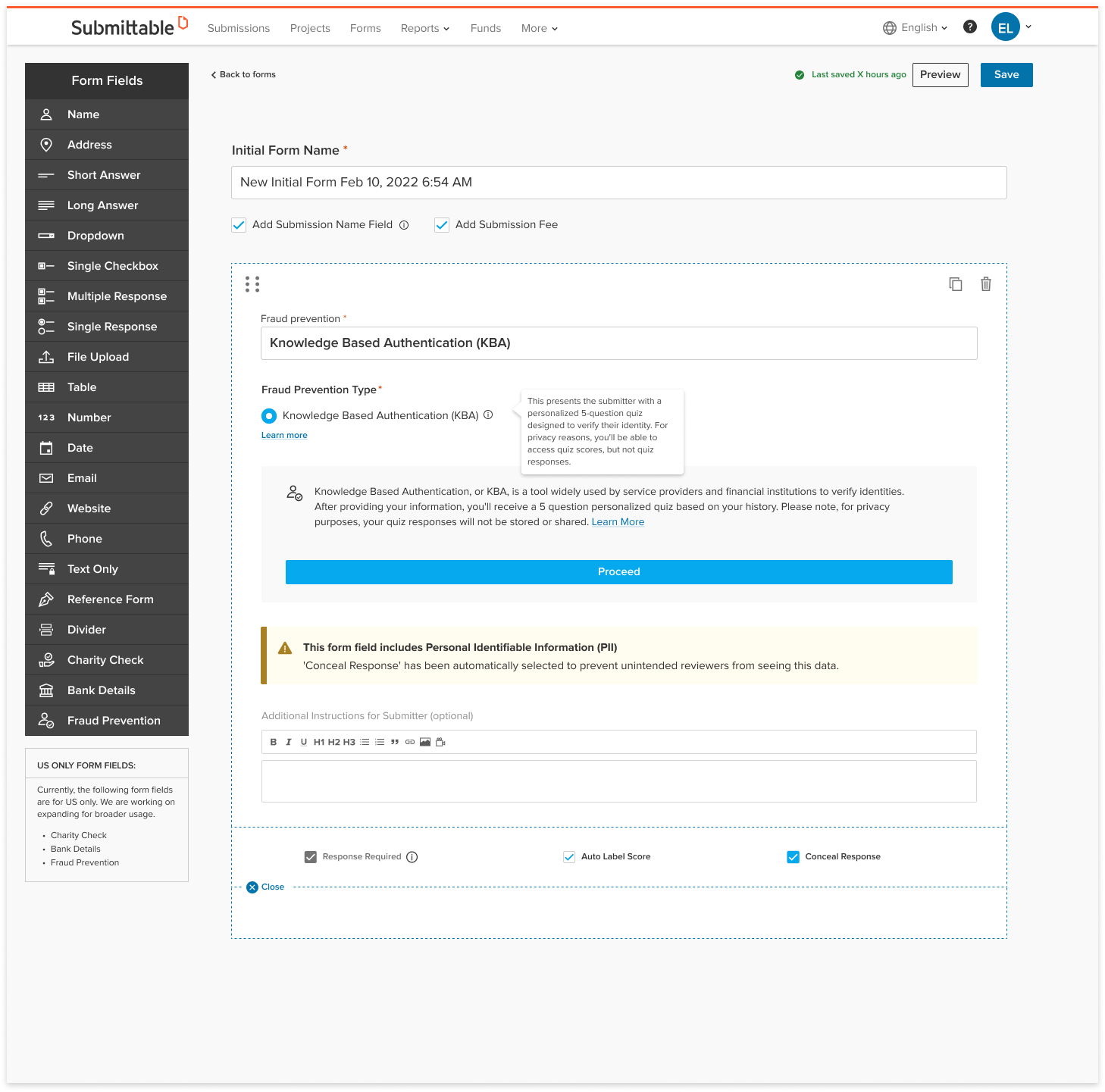
Summary
Fraud has emerged as a pressing issue for grantmakers, especially in large programs with a high volume of applicants. To address this challenge, our objective was to develop an in-app fraud prevention feature focused on verifying the identity of applicants. This feature aimed to enhance fund allocation accuracy and instill confidence among grantmakers, empowering them to make informed decisions and effectively combat fraudulent attempts.
My role
As the product designer, I was responsible for user research, ideation workshops, wireframes, prototyping, testing, and high-fidelity designs.
Challenge
With a rapidly growing client base needing fraud prevention, Submittable had an internal team running a manual process for the first few programs that required identity verification. This succeeded but included time-consuming manual ID checks, labeling, pre-batch sorting, and generating custom reports. We were asked to convert this process into a product feature with the primary goal of enabling an existing client to meet their program launch date in 12 weeks.
User research and discovery
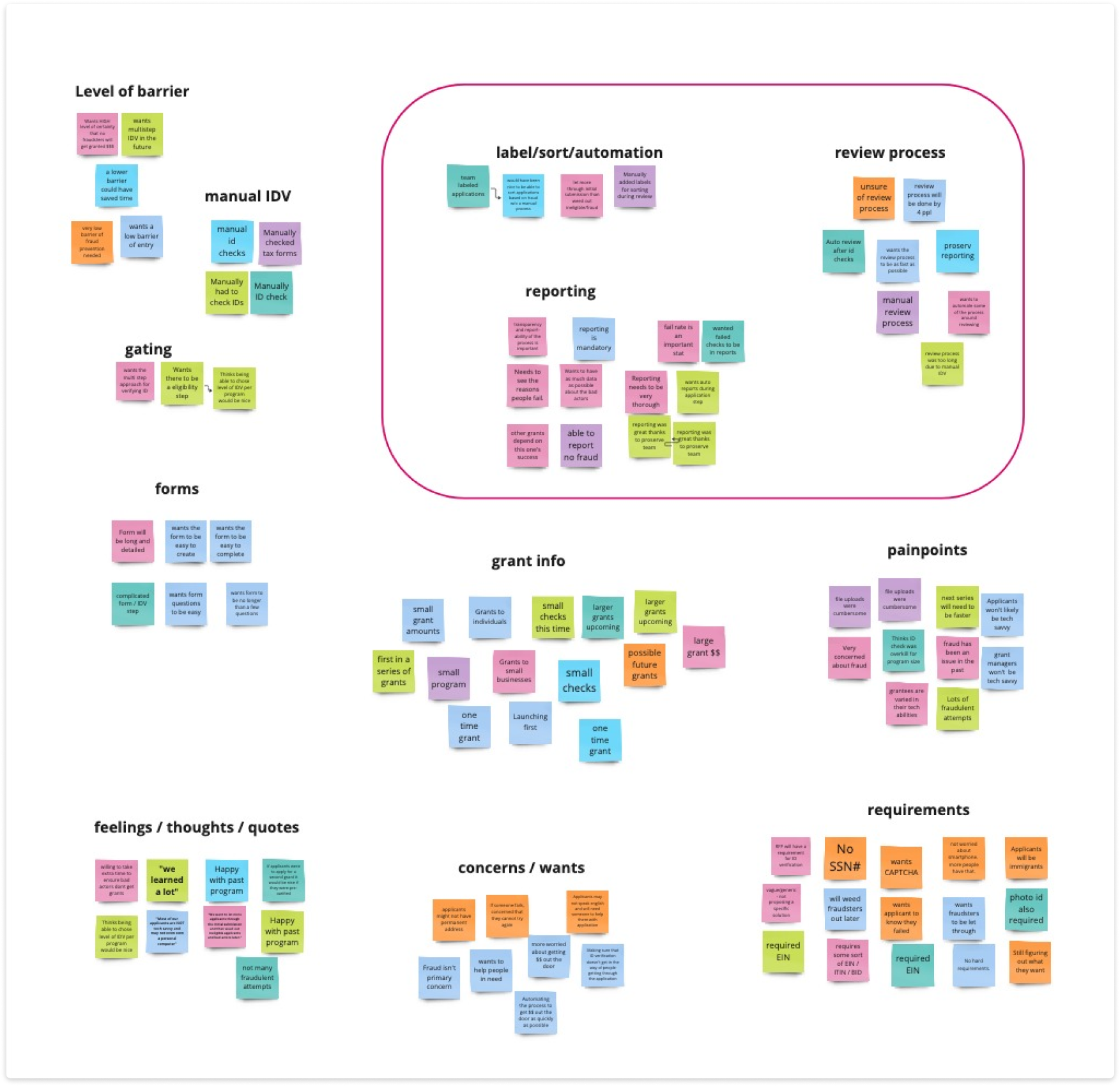
I conducted user interviews with past program grantmakers and internal service team representatives. We reviewed call transcripts and requests for proposal (RFP) criteria from upcoming programs with the product manager. After synthesizing the interview callouts, user requests, and anticipated requirements, I created an affinity map to identify recurring themes.
Themes
Self-select tiers of fraud prevention
Automation of repetitive tasks and application review
Reporting on fraud as a whole or by program
User profiles
Grant managers and program administrators (organization)
Individuals and groups seeking funding (applicants) - this user profile was secondary but was continually considered throughout the process.
"we want to see how the fraudsters are trying to get through and how their techniques are evolving”
"some applicants won’t be tech-savvy and may not even own a personal computer”
Solutioning
To address the user needs for customizable identity verification levels and comprehensive reporting, our team used a collaborative approach. The product manager and engineering lead continued researching API documentation and narrowed down a short list of potential vendors, while I focused on collecting patterns and practices related to identity verification. This research allowed us to understand the common mental models people have when verifying their identities online.
I led a design workshop where we then narrowed down the selection to seven common verification methods and performed a thorough Strengths, Weaknesses, Opportunities, and Threats (SWOT) analysis, aligning the options with our defined user needs. Using the insights from the SWOT analysis, we created prioritization matrices for the team to conduct dot voting. We evaluated the potential solutions based on the ease of use for applicants, the level of security they provided, the engineering effort required, and the compatibility of each solution with our reporting tool.
We leaned heavily on our existing labeling and batching features and our reporting engine to add those pieces to this feature.
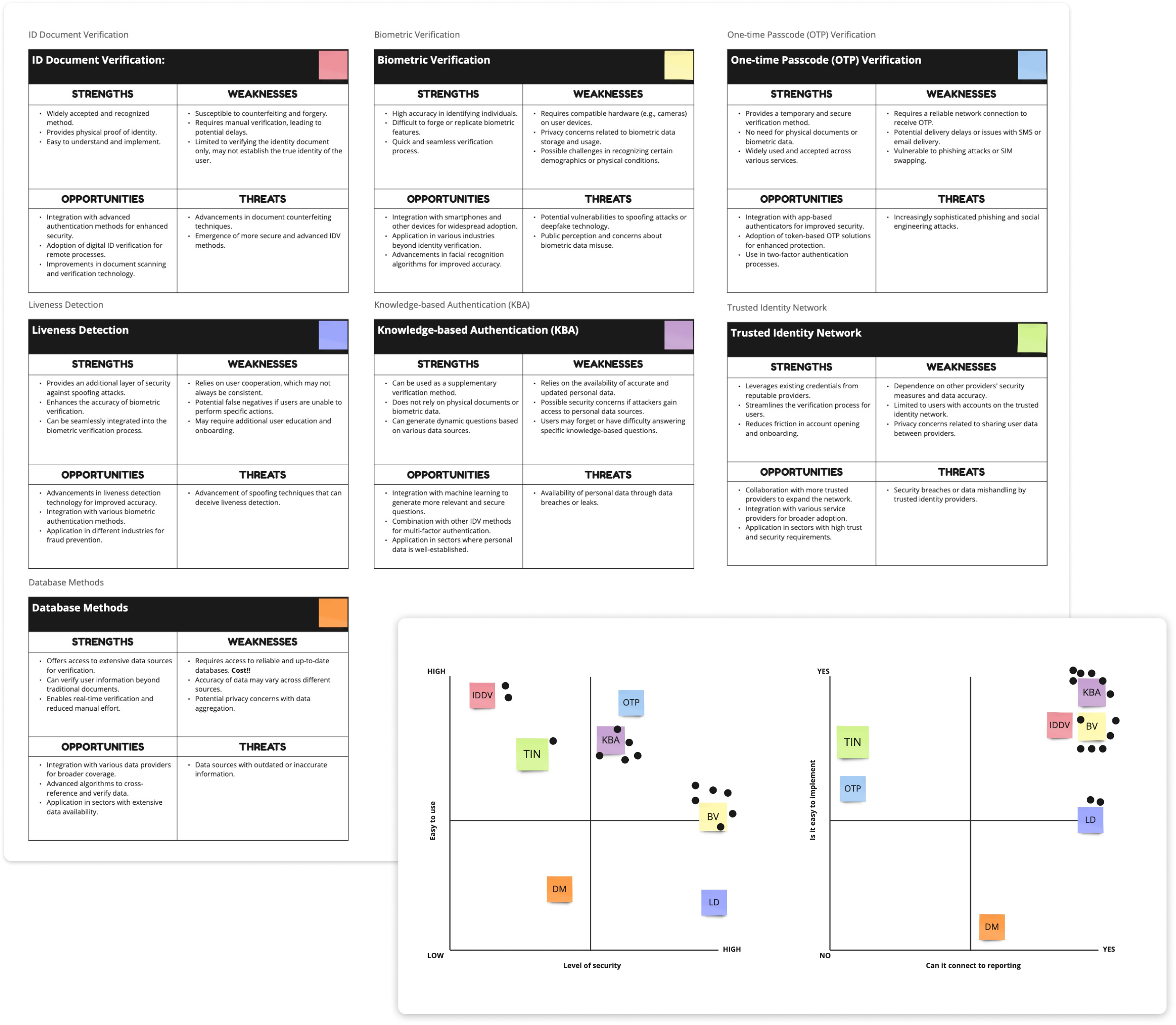
The winners
Knowledge-based Authentication (KBA): KBA generates questions based on the applicant's credit file information to confirm their identity, using their financial and personal history for validation.
Biometric Verification (IDV): Uses facial images or selfies to confirm that the person holding an ID matches the photo on the ID, enhancing security through facial recognition.
Hypothesis
Grantmakers using the Fraud Prevention feature will experience increased confidence in funding suitable applicants, as they will have access to identity verification scores and reports, enabling them to take appropriate action based on the results.
Wireframes, prototypes, and testing
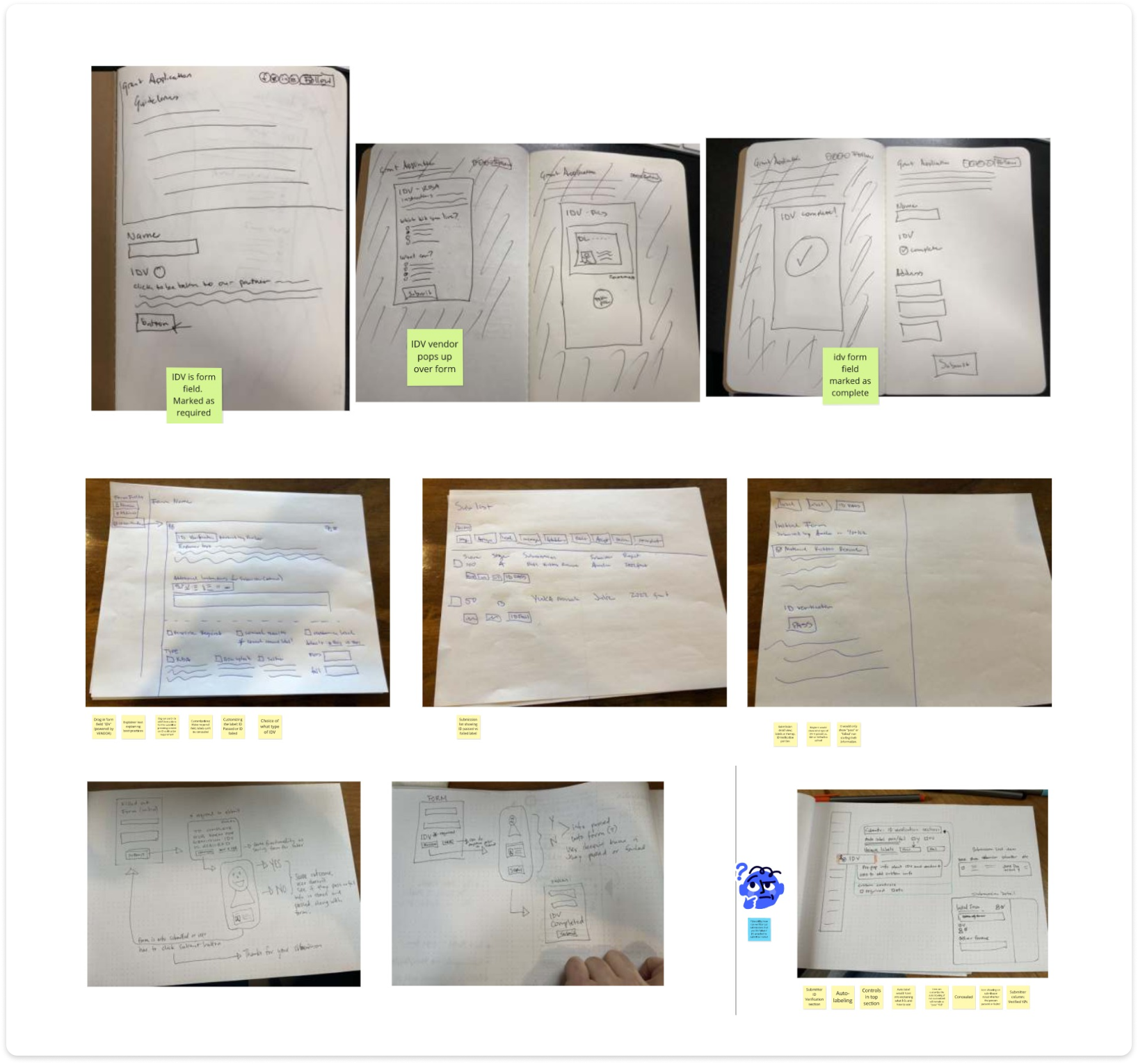
In another workshop, team members independently sketched their solution ideas on paper. Each team member then presented their thoughts, and we collectively discussed and refined the most promising concepts for the first iteration.
By the end of the following day, I could translate sketches into a low-fidelity digital prototype. I used a basic wireframing kit in Figma at this stage to move as quickly as possible to test our design assumptions with an in-house usability testing exercise.
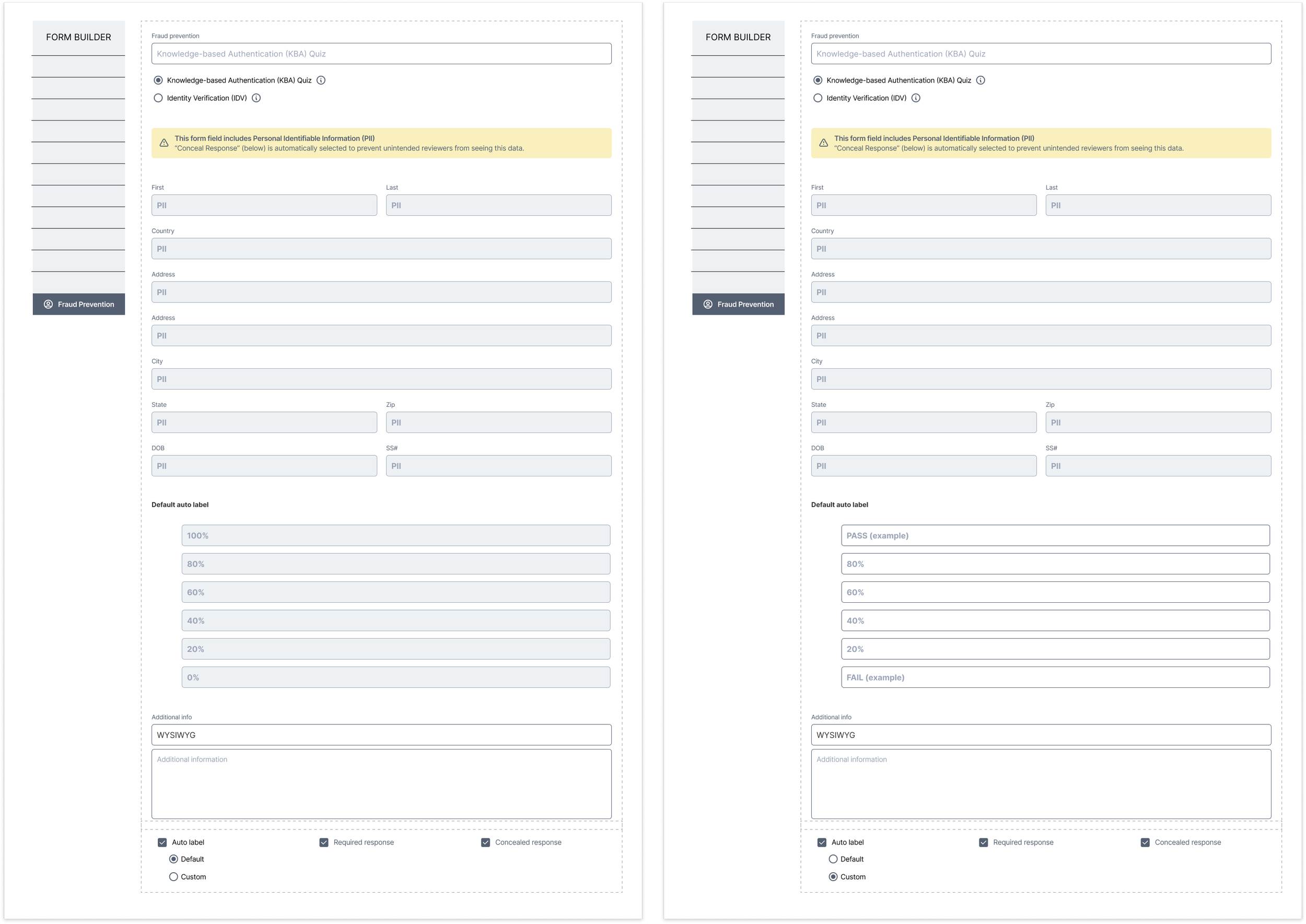
KBA_Form builder (organization)
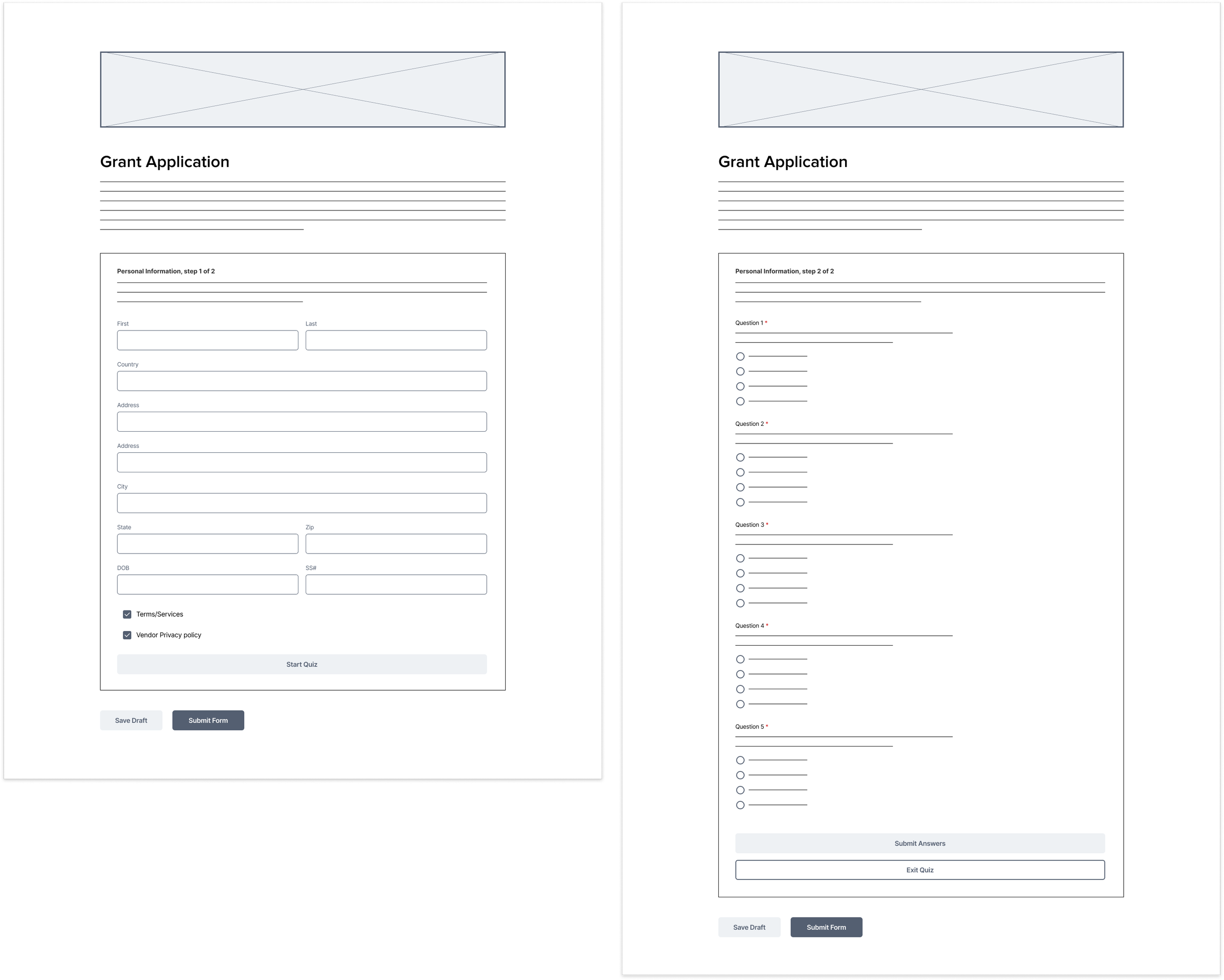
KBA_Form (applicant)
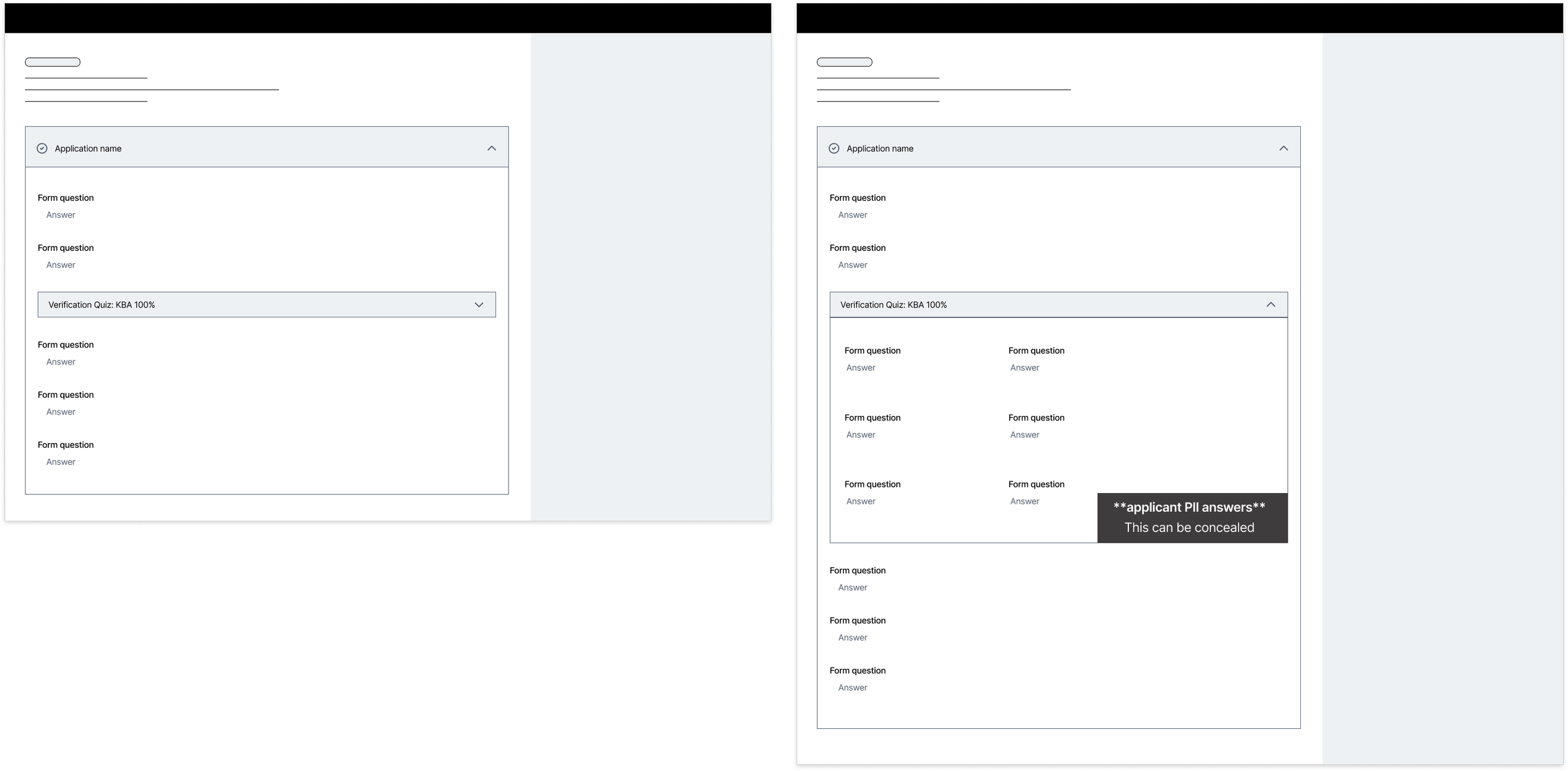
KBA_Form submission (organization)
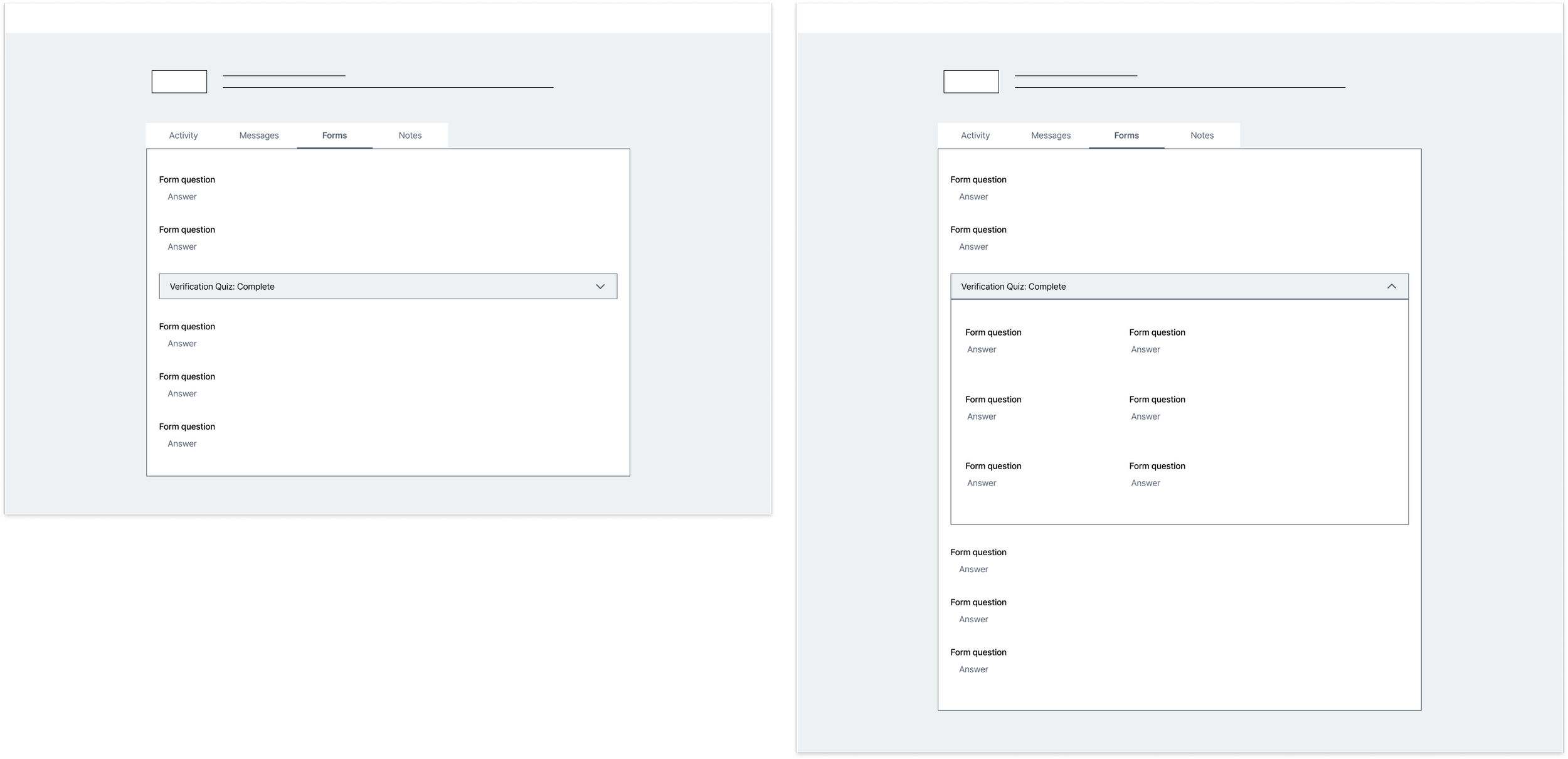
KBA_Form submission (applicant)
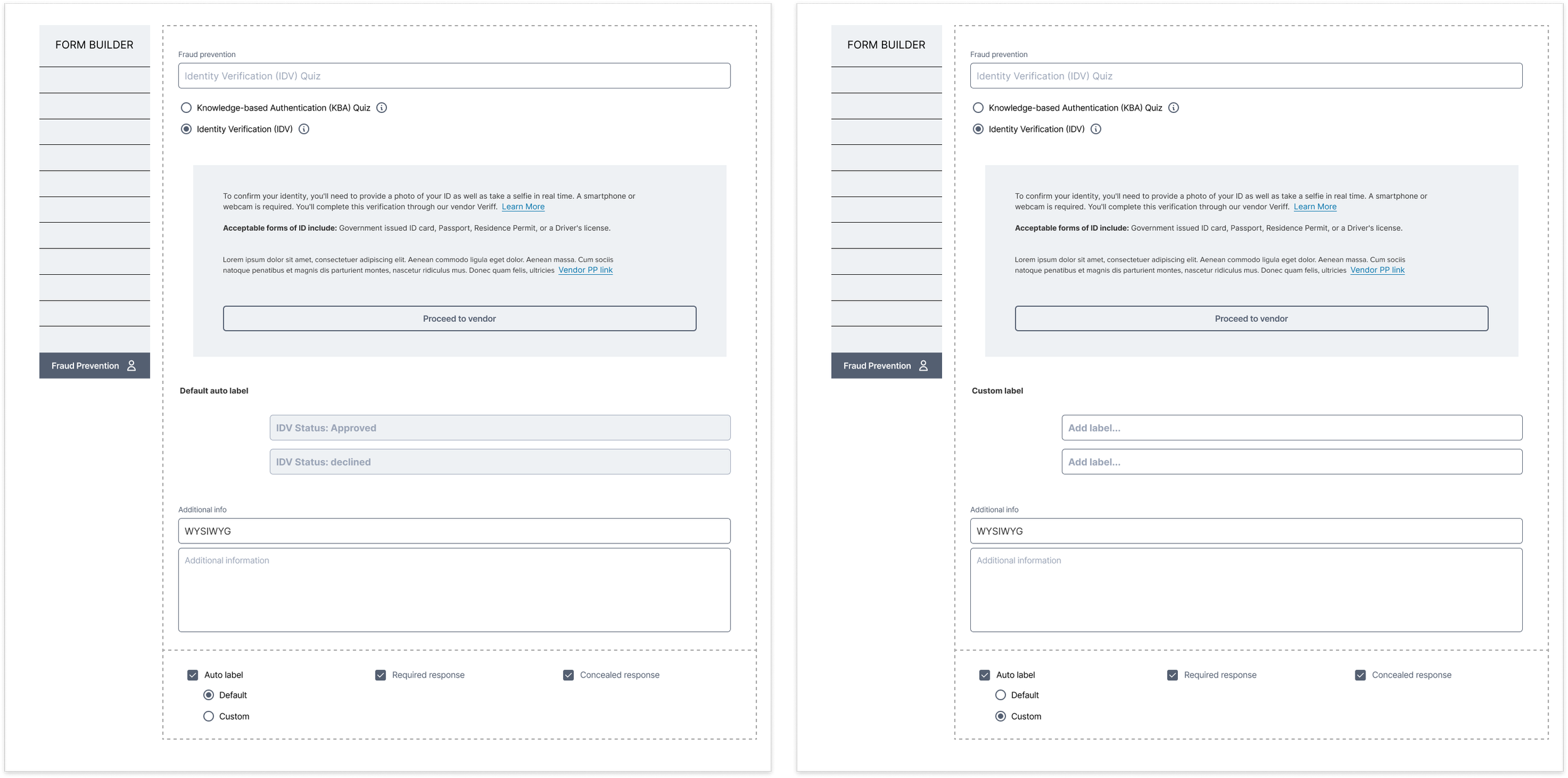
IDV_Form builder (organization)
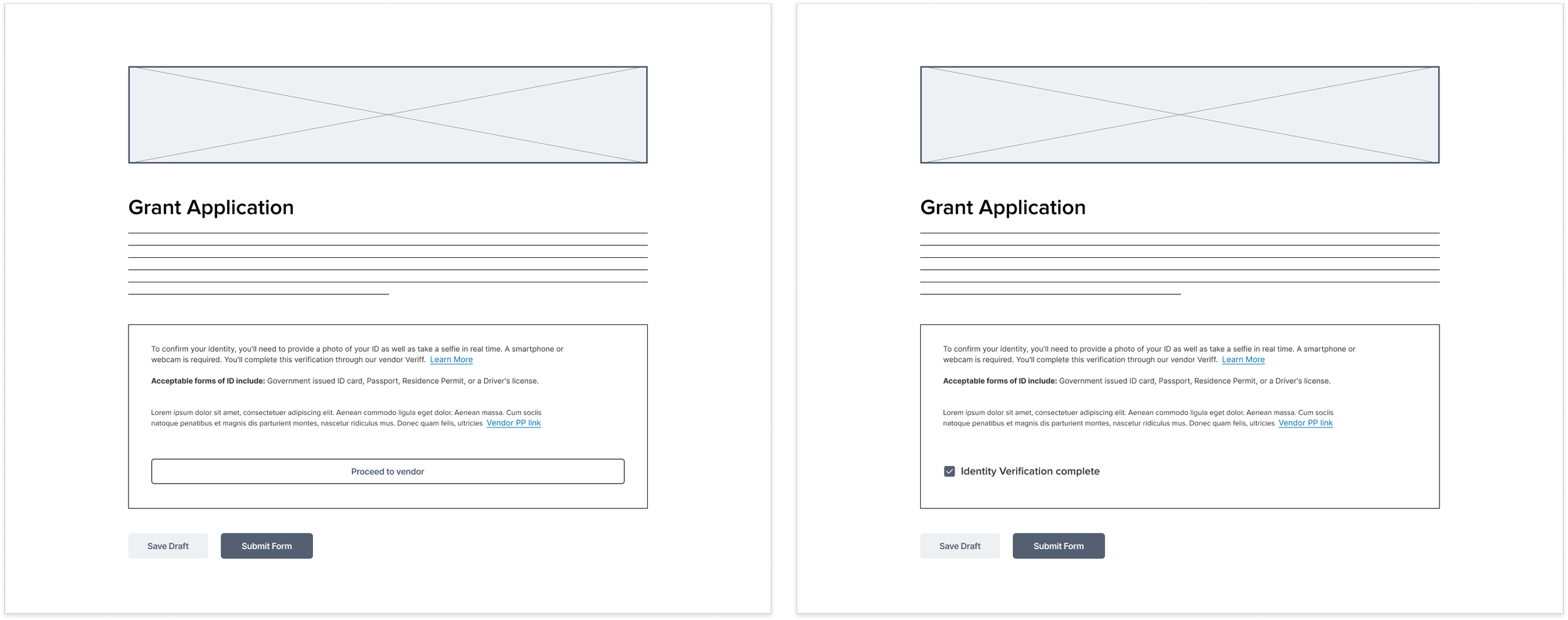
IDV_Form (applicant)
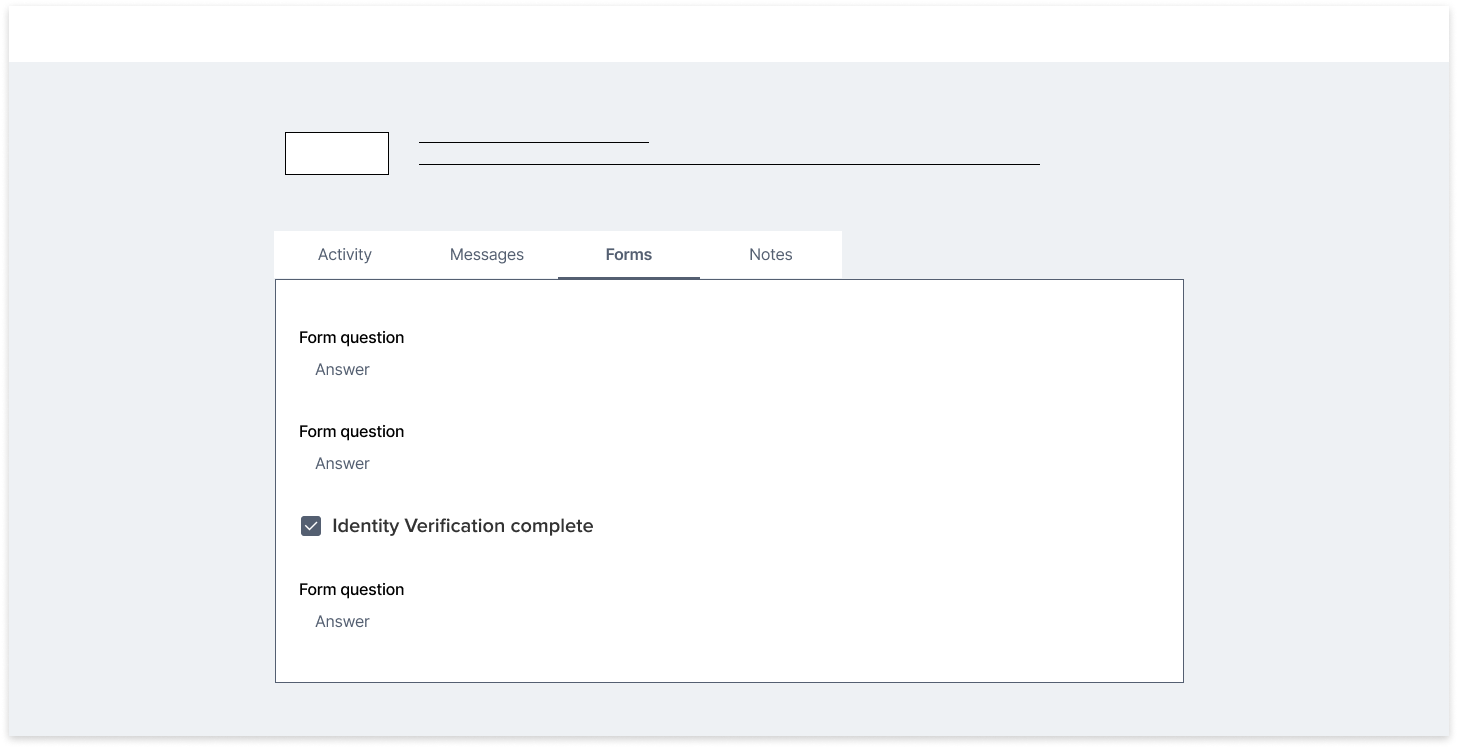
IDV_Form submission (applicant)
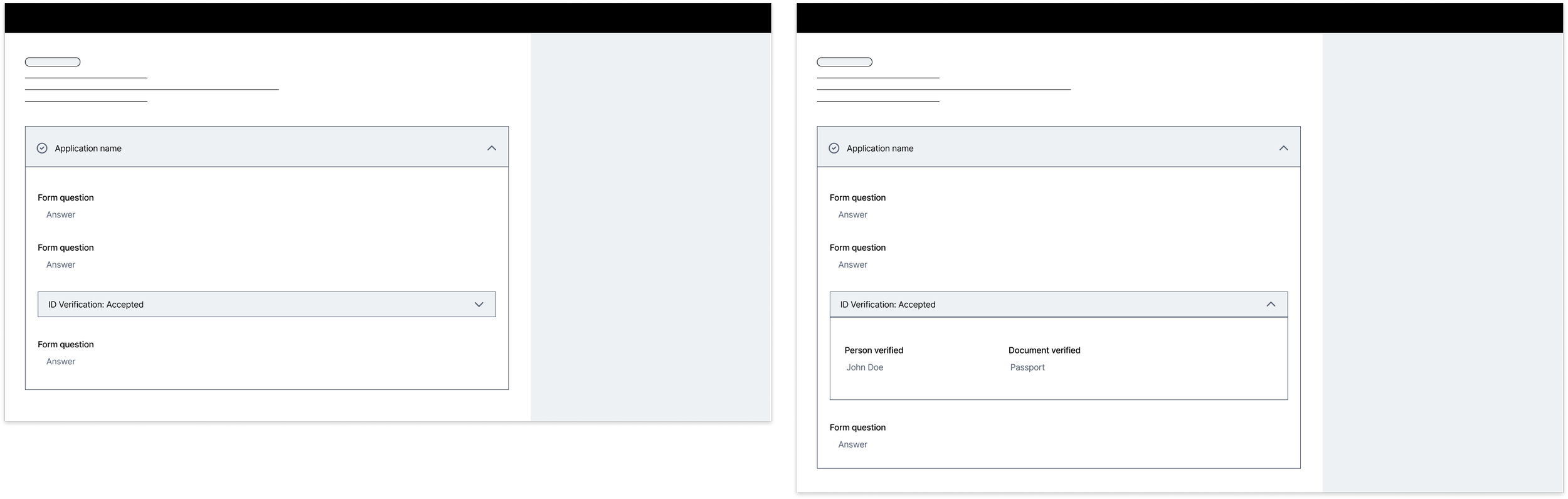
IDV_Form submission (organization)
Usability testing
For application creators (group one), our assessments centered on usability and clarity of identity verification levels. We recognized the necessity of enhancing the knowledge-based authentication (KBA) section with additional information. We also addressed concerns related to the display of disabled personally identifiable information (PII) form fields to improve user awareness regarding the end user's experience.
Feedback from end users (group two) uncovered an opportunity we had missed to inform users about the KBA quiz in advance. To meet this requirement, we introduced linked help articles providing additional information. Additionally, it became evident that users needed a clear understanding of the ID verification (IDV) requirements before beginning the process. We confirmed that locating completed applications and accessing fraud prevention form responses was straightforward for end users.
“I understand that the end user will need to fill out the PII fields but having them in the form builder confused me”
“I was surprised by the type of questions that were asked once I initiated the quiz”
Final designs
I translated the insights gained from our in-house testing into high-fidelity designs. These designs reflected the refinements and improvements based on the user feedback, ensuring a user-centric approach to the feature development. With the final requirements solidified, we prepared user stories to guide us through the sprint planning and backlog grooming process.
We divided the fraud prevention feature into two phases. Phase one centered on implementing the KBA portion to meet our first client's launch date successfully. We put phase two on hold to thoroughly test and ensure the quality of phase one. This decision allowed us to meet the client's deadline and fix several potential issues in pre-production.
Our phased approach led to a delay in meeting our final delivery date for the complete feature set. This decision wasn't made lightly, as we recognize the importance of timely implementation. Our unanimous agreement stemmed from prioritizing a seamless user experience for our initial users, knowing it would provide valuable insights for the second phase.
KBA_Form builder (organization)
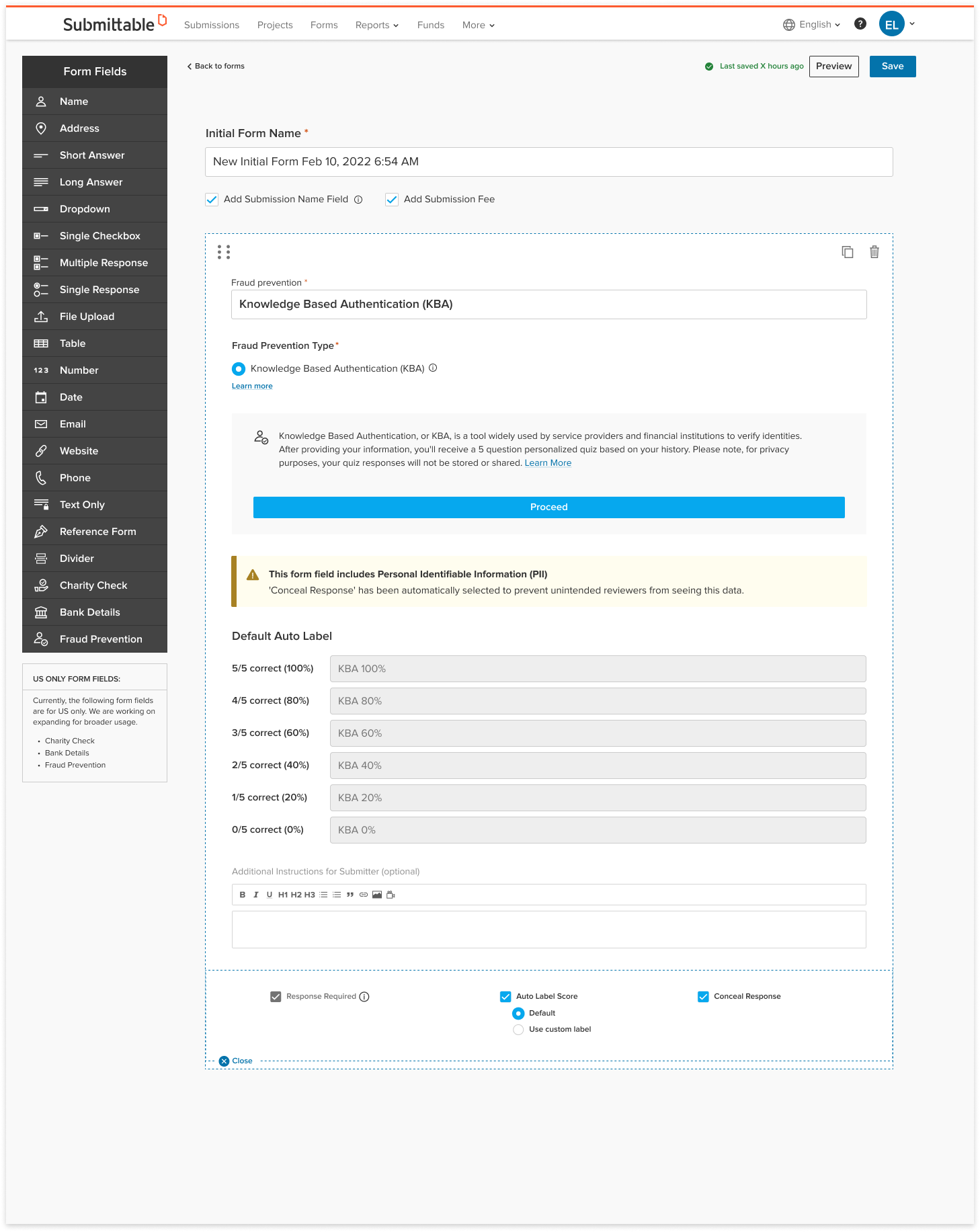
KBA_Form builder - auto labels (organization)
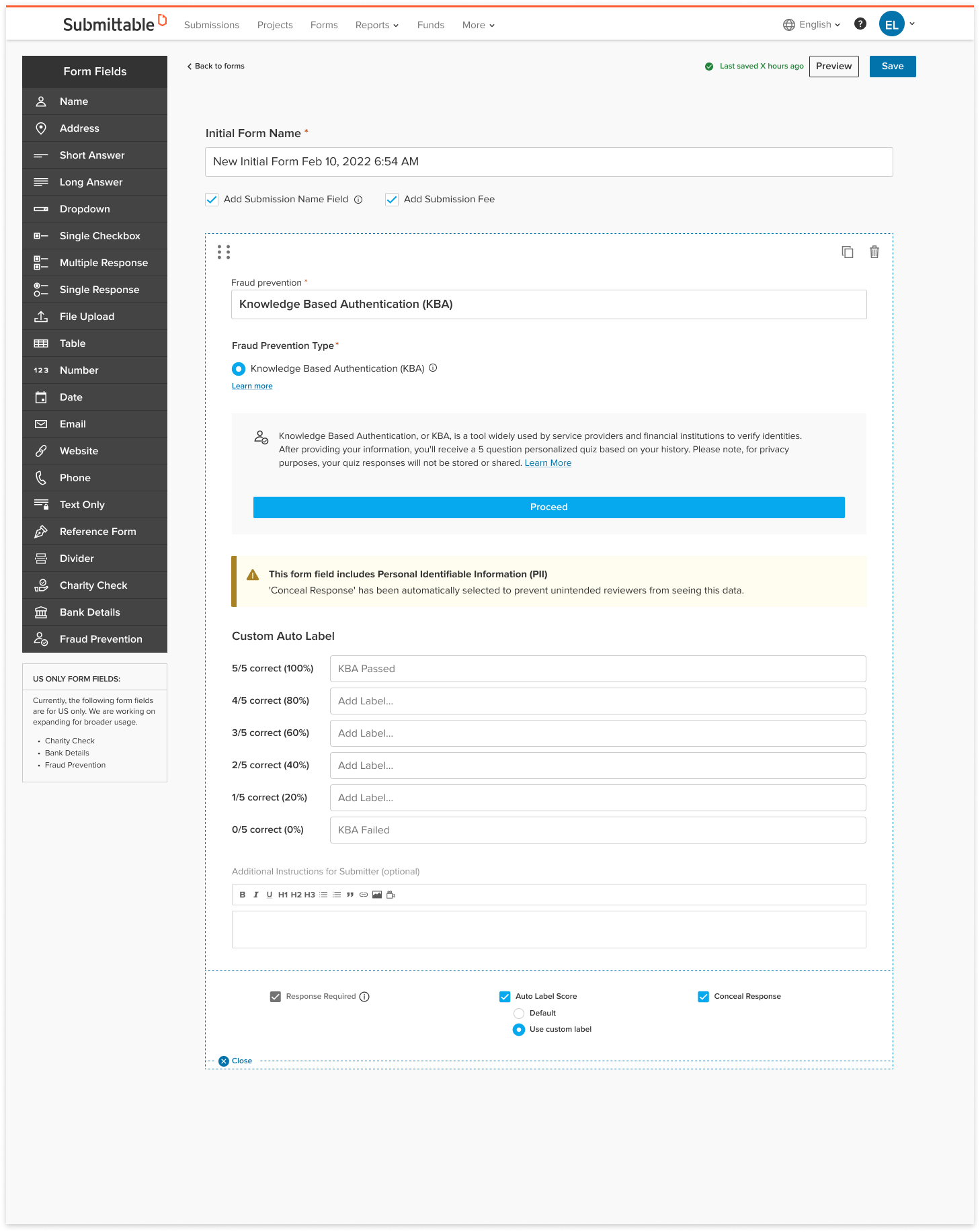
KBA_Form builder - custom labels (organization)
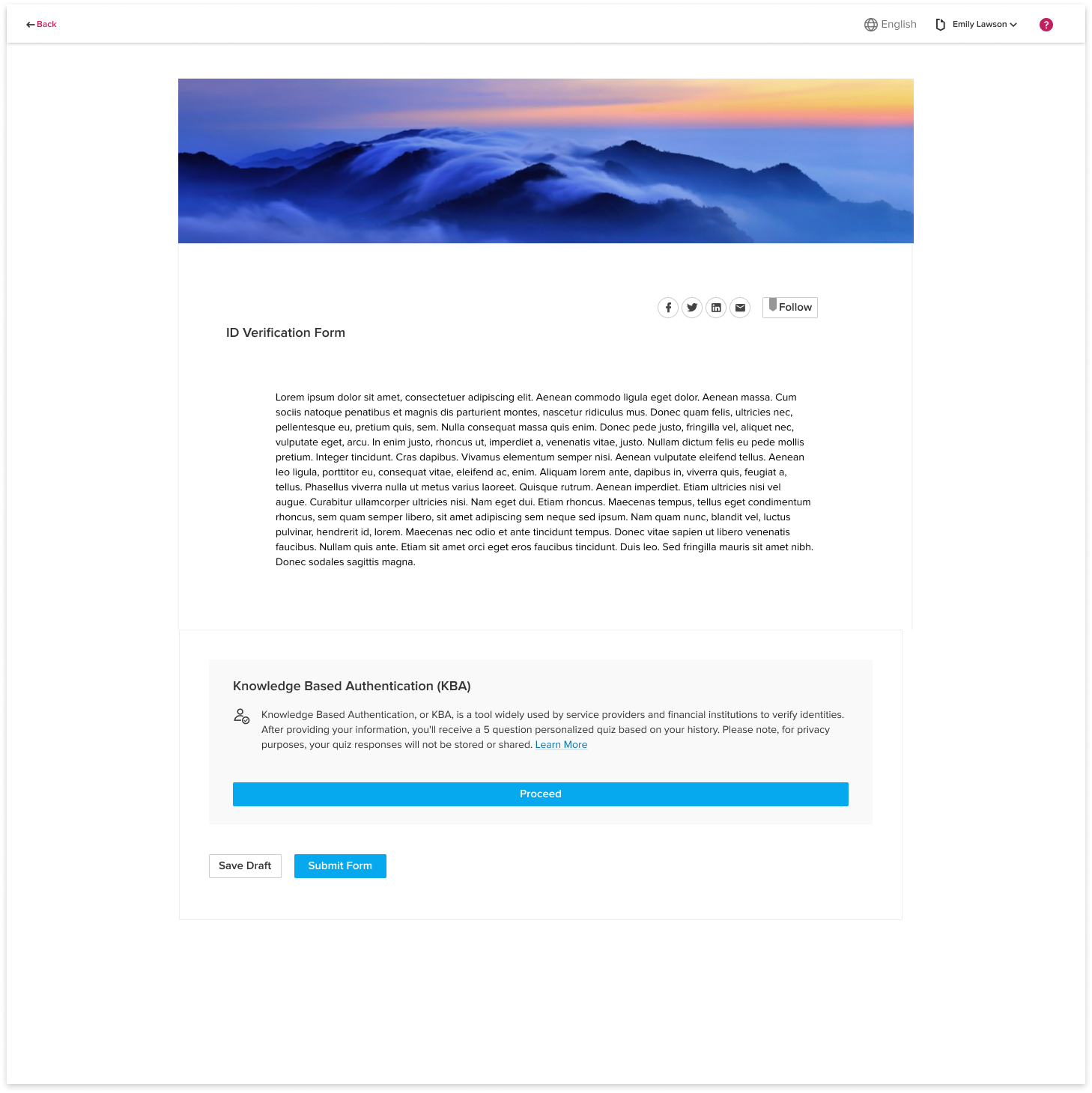
KBA_Form step 1 (applicant)
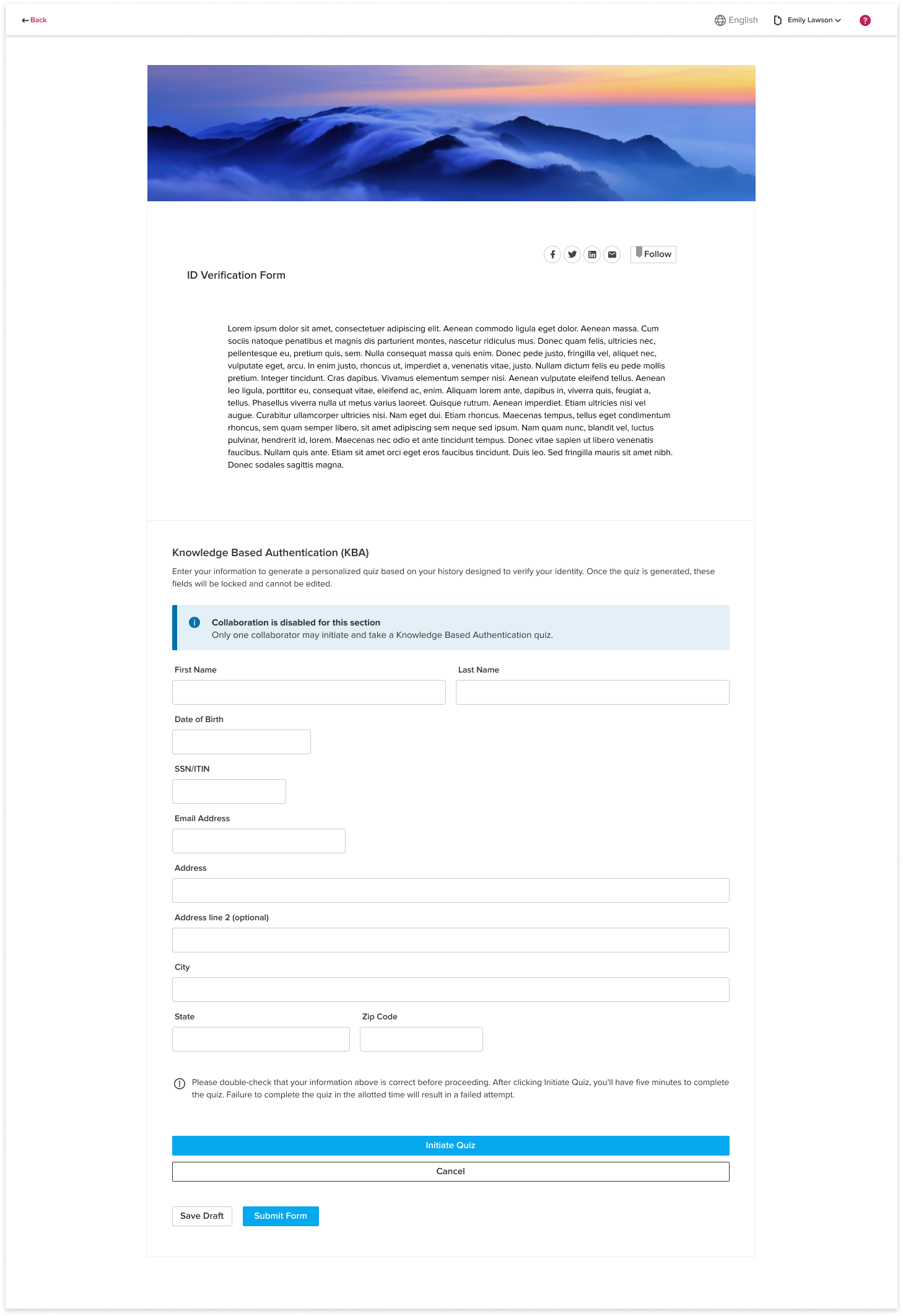
KBA_Form step 2 (applicant)
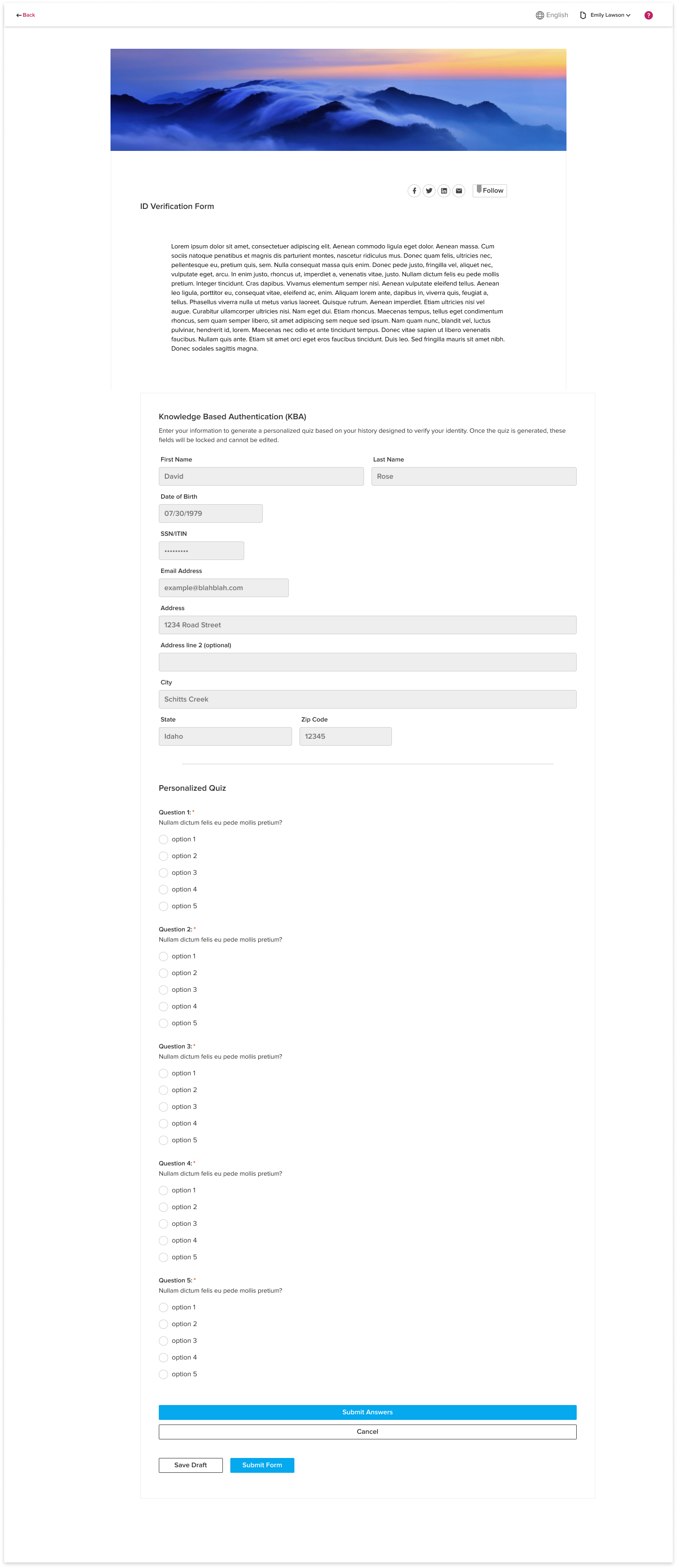
KBA_Form step 3 (applicant)
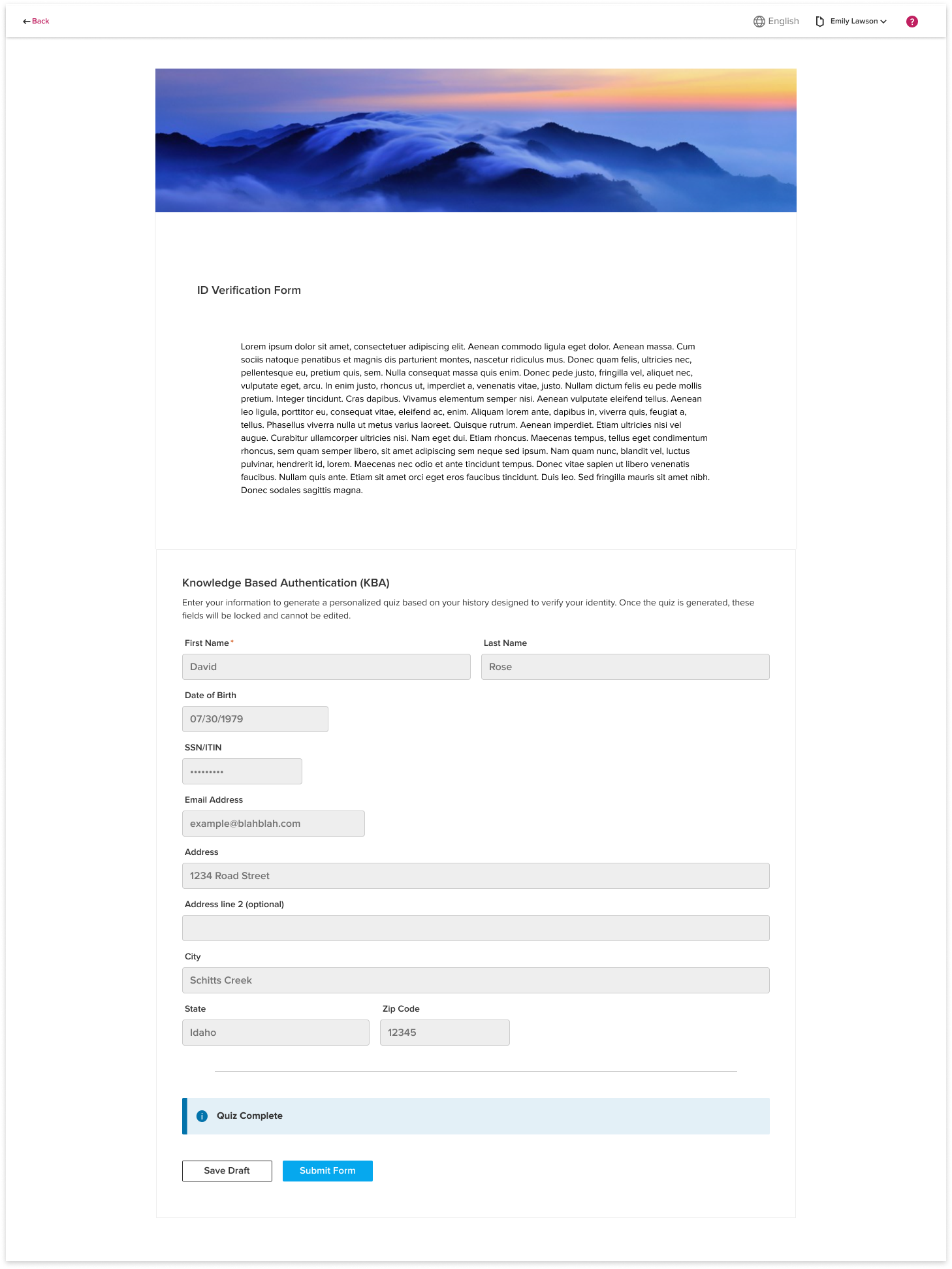
KBA_Form complete (applicant)
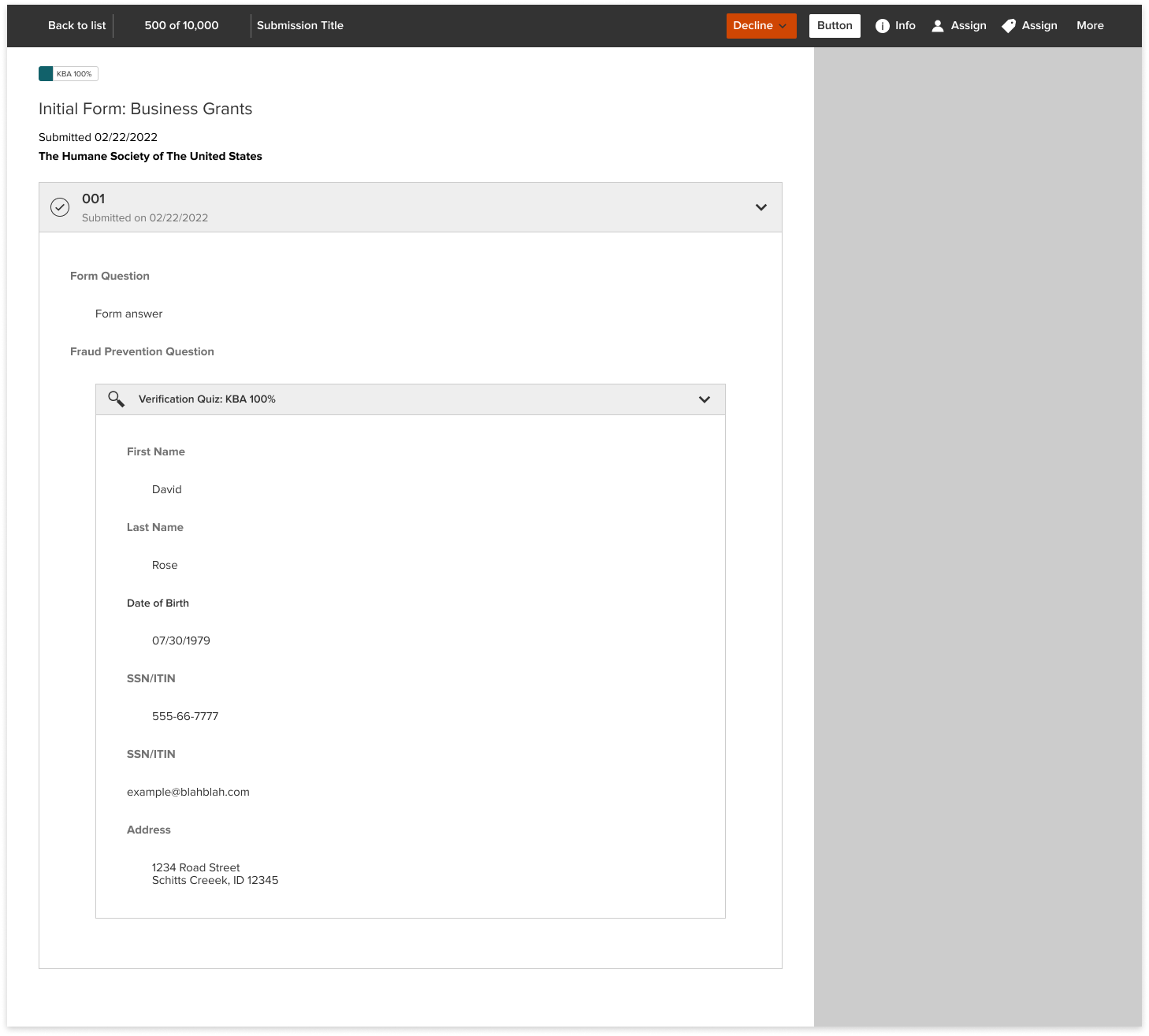
KBA_Form submission (organization)
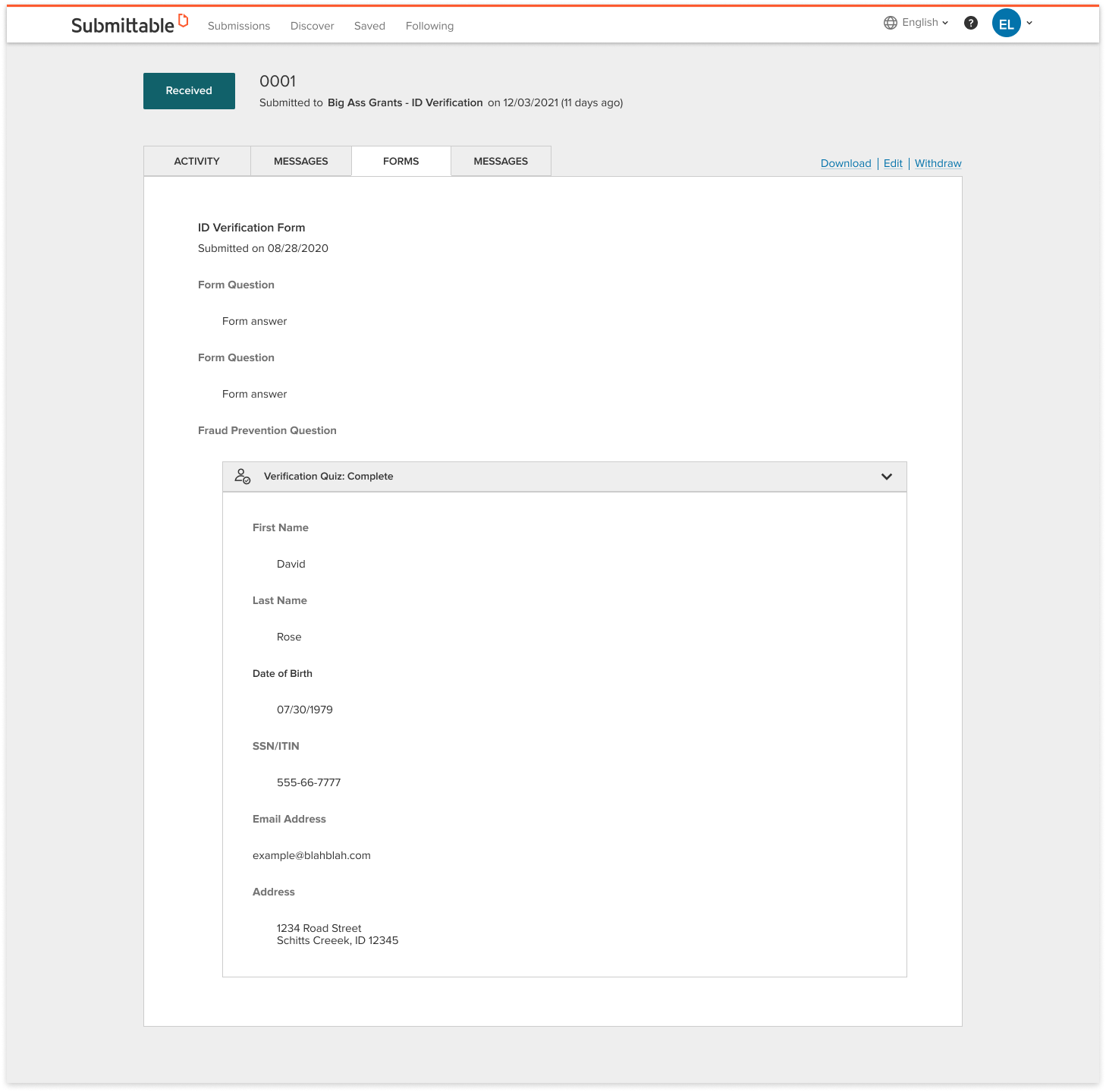
KBA_Form submission (applicant)
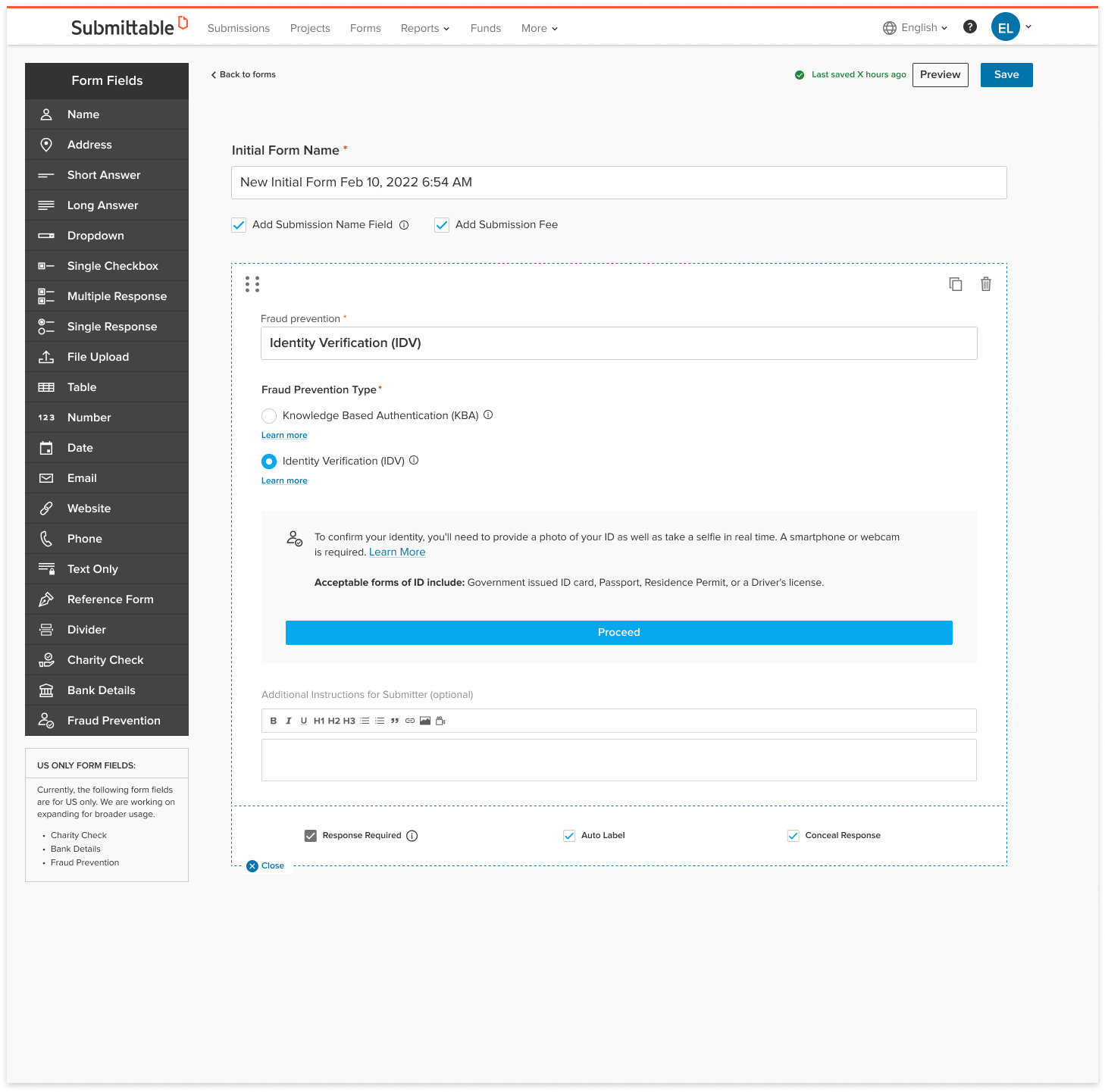
IDV_Form builder (organization)
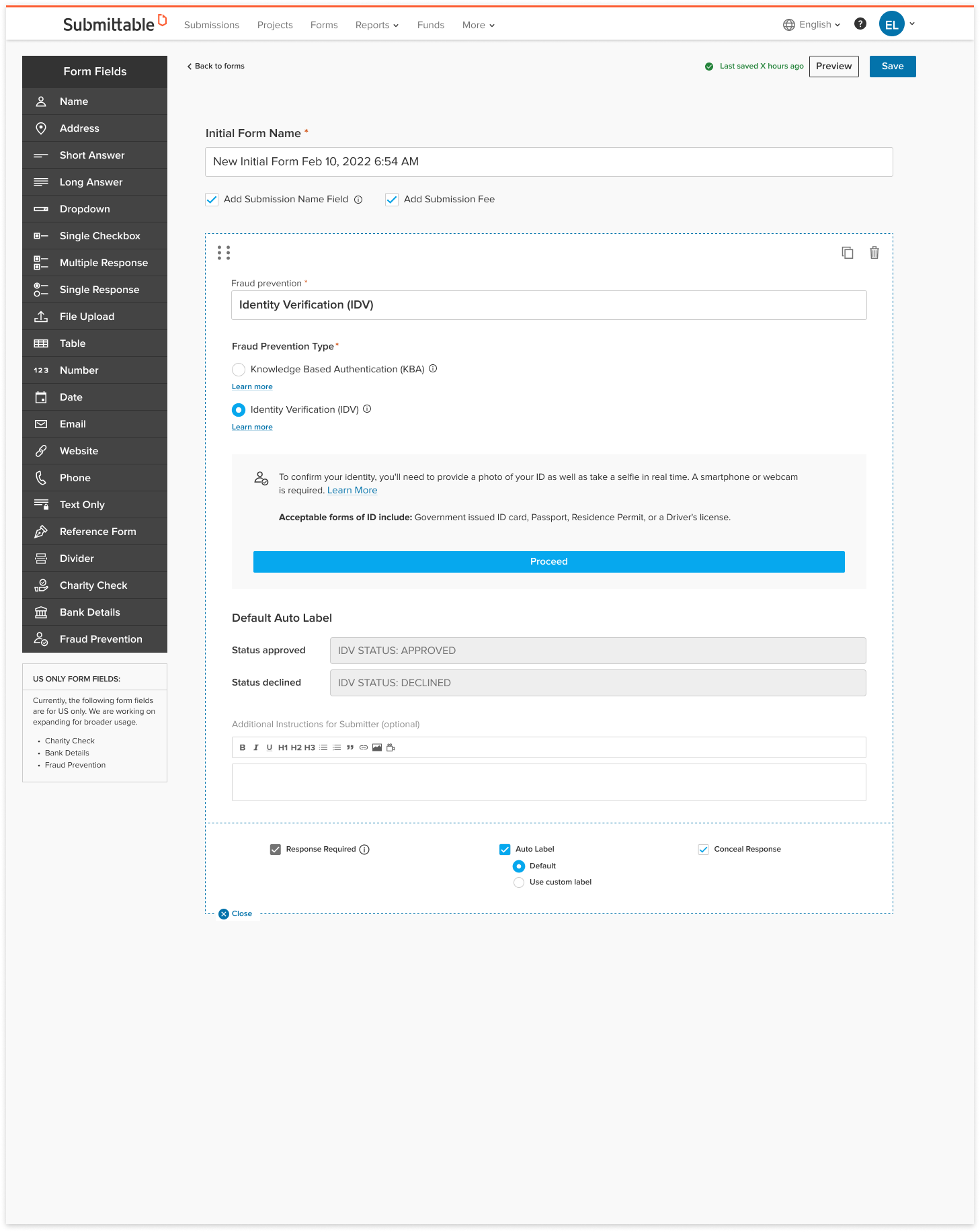
IDV_Form builder - auto label (organization)
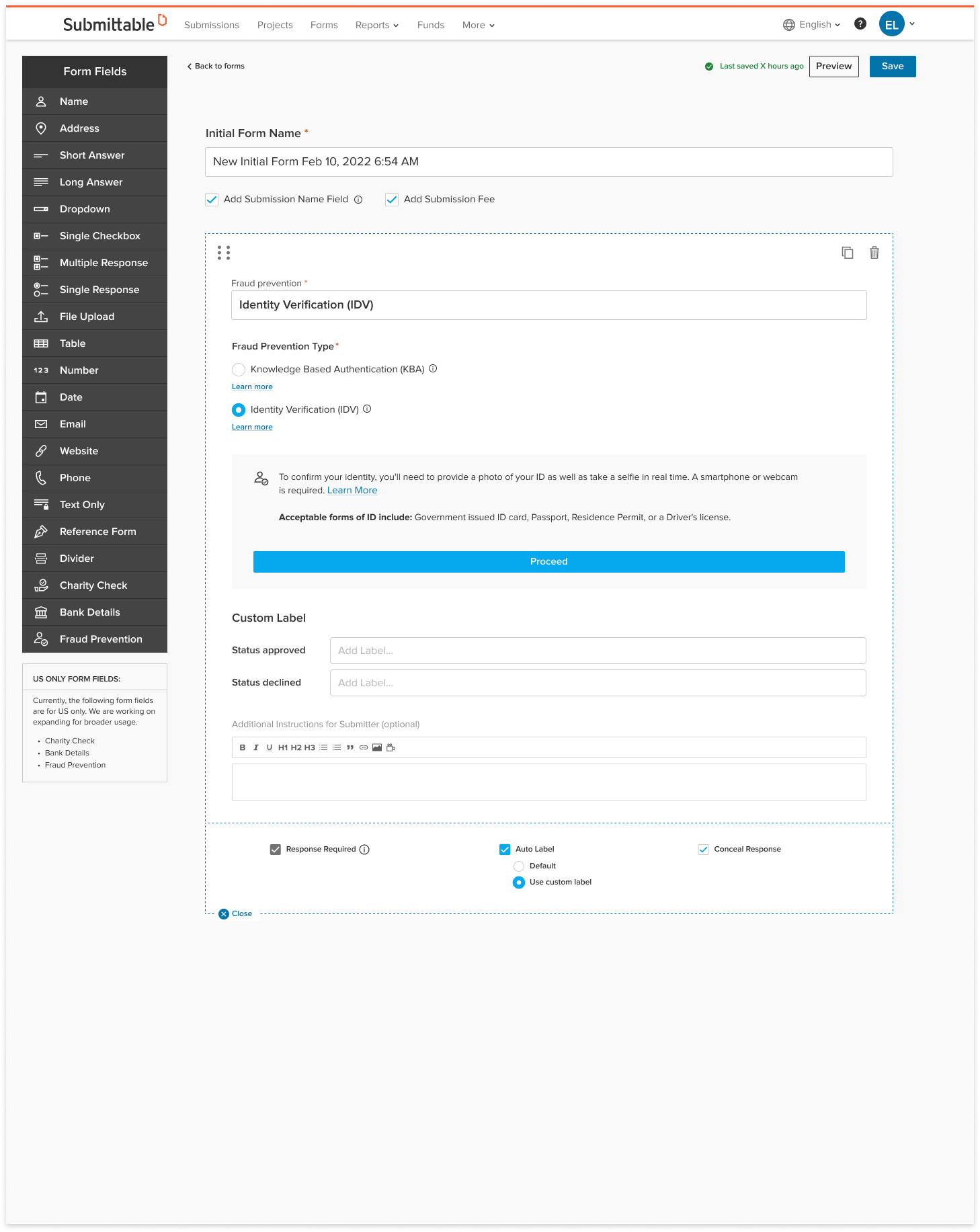
IDV_Form builder - custom label (organization)
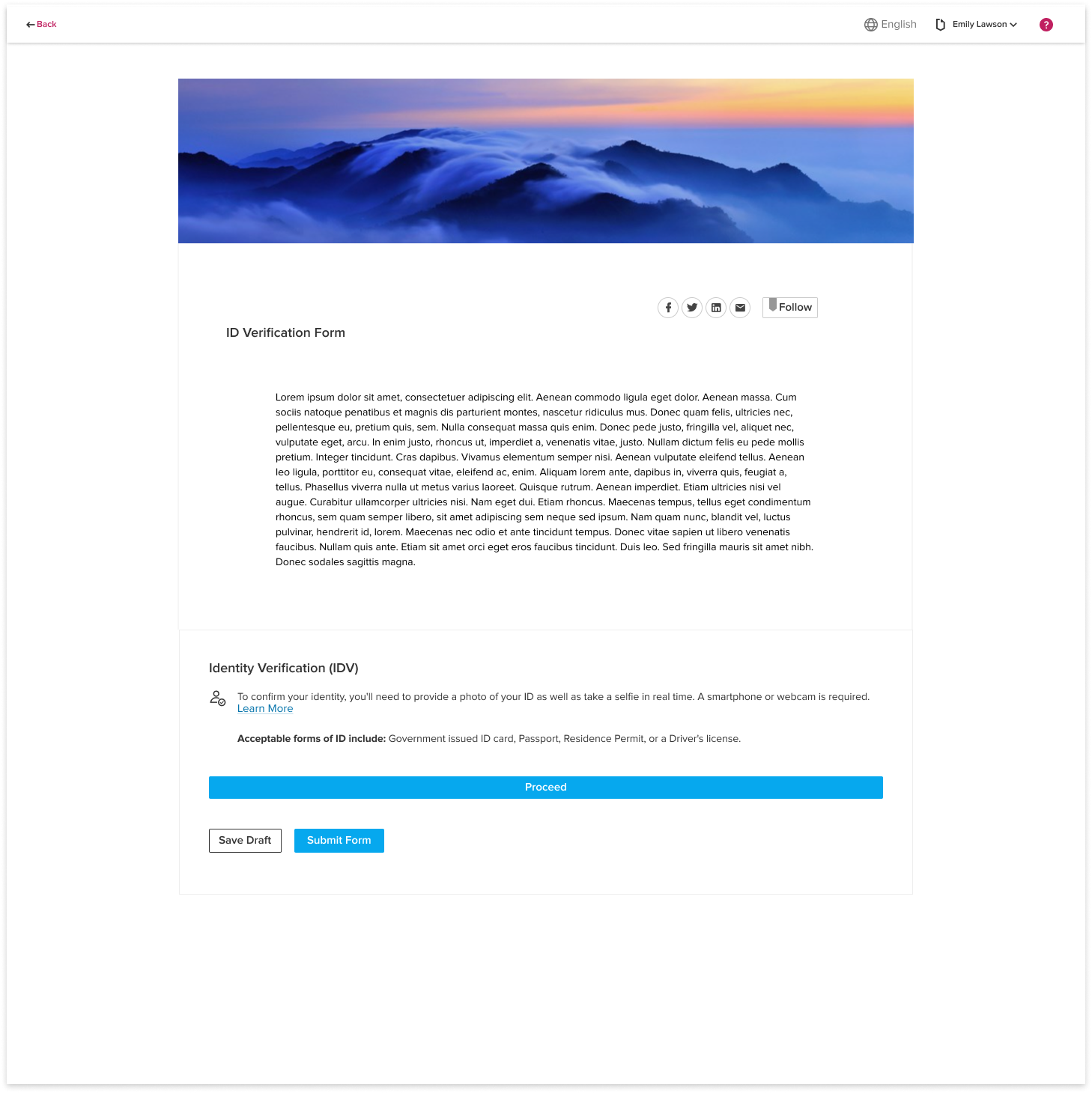
IDV_Form (applicant)
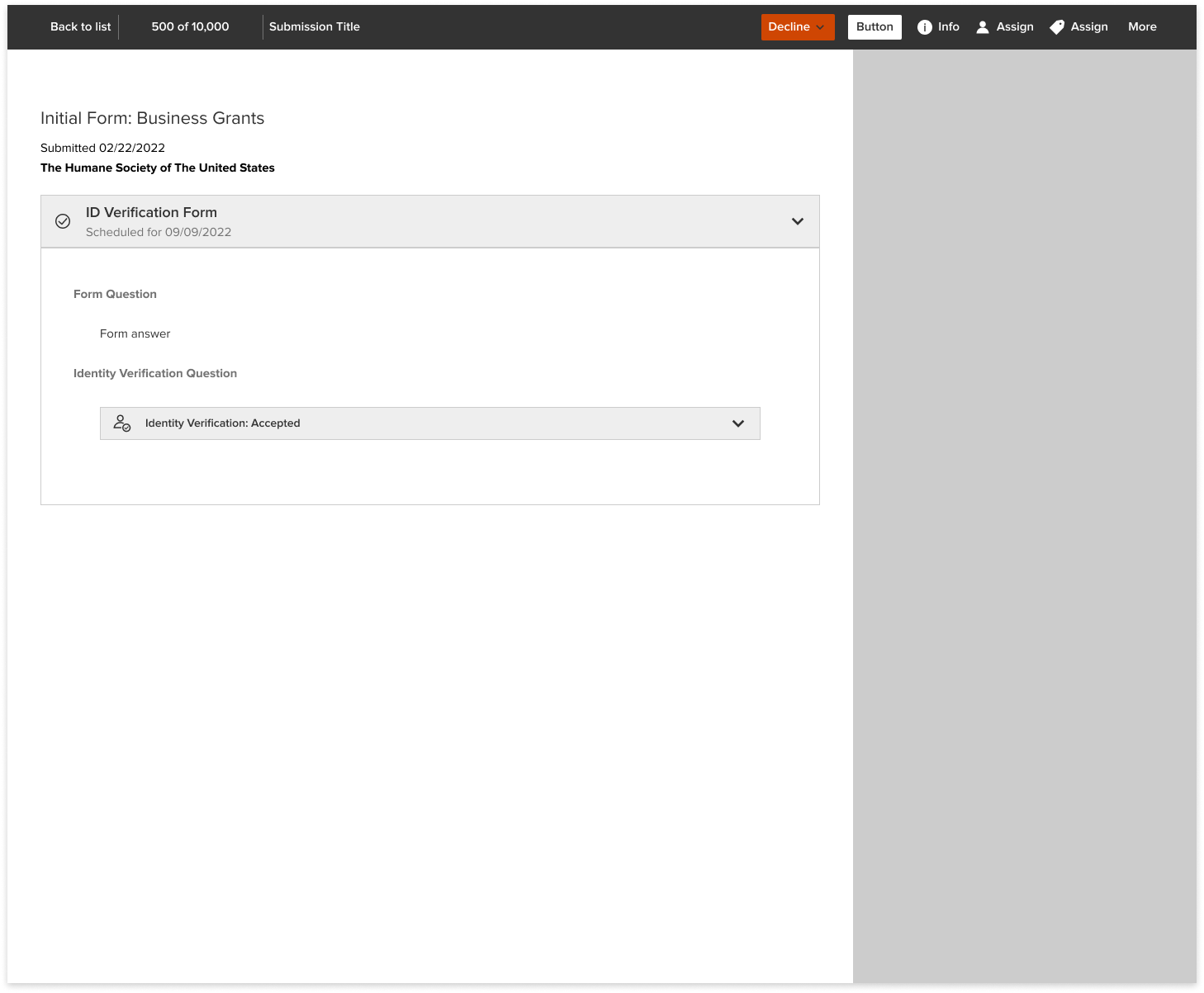
IDV_Form submission (organization)
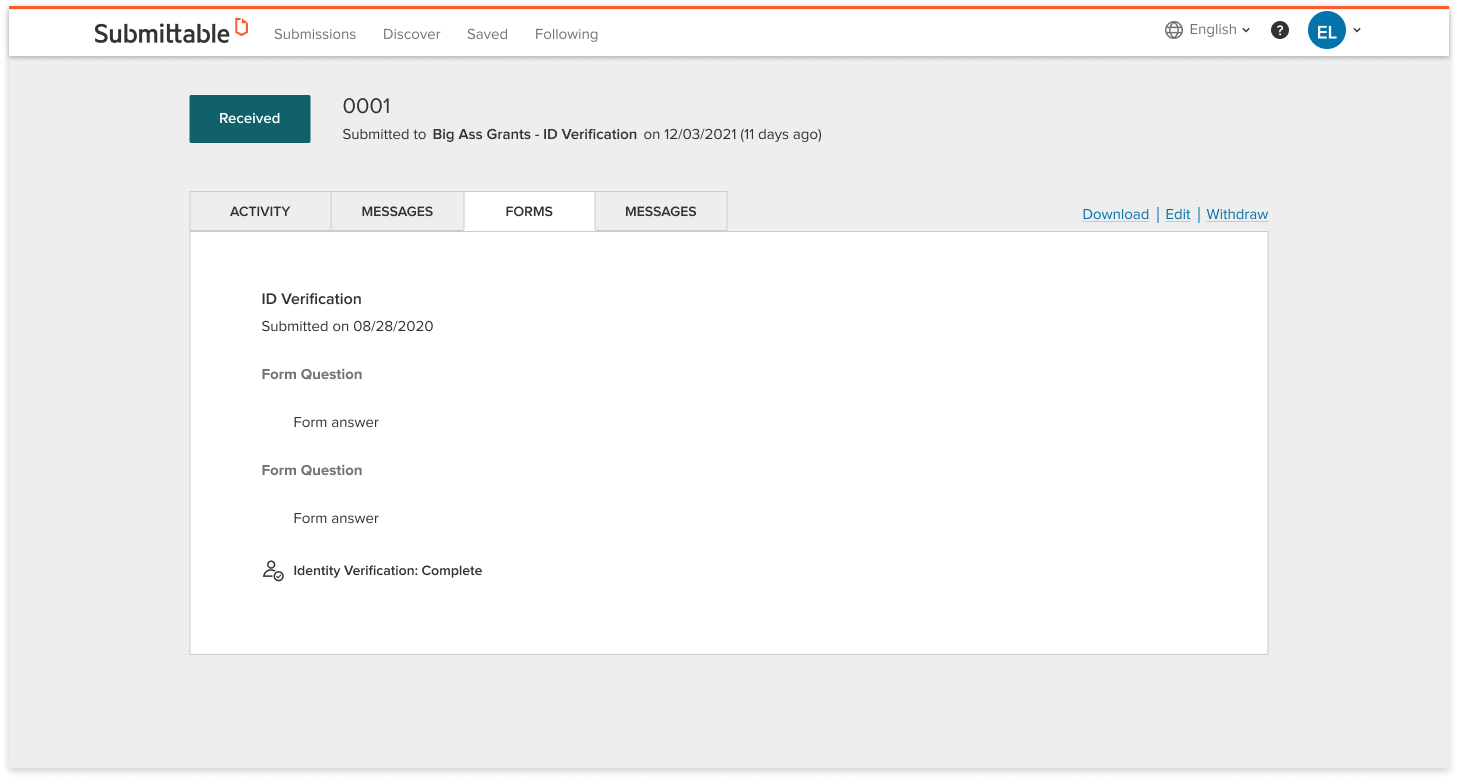
IDV_Form submission (applicant)
Results
Our in-app fraud prevention feature was implemented successfully and delivered substantial benefits to our clients. The first client swiftly went live, preventing a remarkable $2.2 million fraud for their initial program. This success drove immediate business growth, securing three additional deals post-launch.
By enabling grantmakers to customize identity verification levels and access comprehensive fraud reports, our feature addressed the critical fraud issue while ensuring accurate fund allocation to deserving applicants. Over the following year, it screened 1.2 million individual applicants.
As we launched the complete feature, I transitioned to another team. I documented all user testing processes, scripts, and findings to ensure a smooth transition and ongoing iterations.